
Why Diversity in Tech Matters- 'People solve problems that they see'- EdBoard
01 August 2014
The GovLab Editorial Board Meetings (“EdBoard”) showcase news and events that encourage thought and discussion about The GovLab’s work.
EdBoard is a twice-weekly opportunity for The GovLab team to reflect on how approaches and technologies could help solve problems differently with an eye toward ensuring our work creates real-world impacts. More than anything, EdBoard is about getting people talking.
Each EdBoard is led by one or two members of The GovLab team. Recaps of each EdBoard meeting are posted on our blog each week.
——–
Tuesday, July 28, 2014
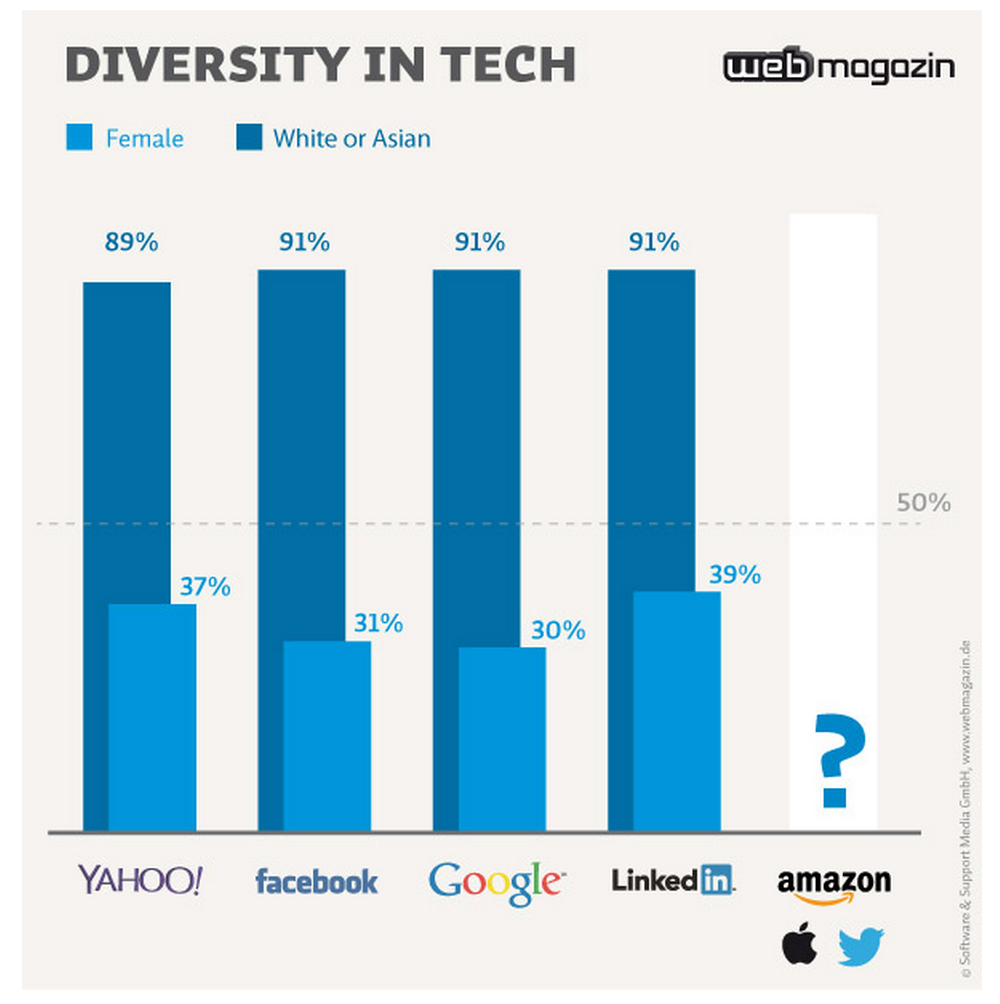
More than ever before, local, state, and federal governments are asking citizens to help solve public problems with technology and innovation. The GovLab was founded to explore this new model of civic engagement. However, much of the criticism directed at civic tech and other participatory governance experiments centers around inclusion and diversity among those contributing solutions to public problems. Academics and government innovators agree: Access is not enough.
In Tuesday’s Ed Board meeting, GovLab staff members discussed diversity and inclusion in tech as it was framed by a recent episode of NPR’s Tell Me More in which host Michel Martin features prominent minority (Black, Hispanic, women) innovators and activists in the tech field. To ground our discussion in how tech inclusion and diversity relates to our work at the GovLab, we highlighted the recently published Design Action Research with Government: A Guidebook, as featured in an article by Nancy Scola on NextCity.org. The 18-page guidebook, a product of collaboration between Boston’s Mayor’s Office of New Urban Mechanics and Emerson College’s Engagement Game Lab, details the benefits and strategies for design action research partnerships between academia and local government.
People solve the problems that they see… There are 10 start-ups for every problem a rich person has. -Benjamin Jealous
The major implication here is that, given more investment and opportunities to innovate, entrepreneurial individuals from marginalized communities will create solutions for problems that affect them and those like them. The examples below are products of such investment and opportunity discussed during the interview and by The GovLab staff.
- Telepigeon by Pigeon.ly– Significantly cuts the costs for inmates calling their families from prison.
- Regalii– Disrupts Western Union by making it cheaper and easier for family members living abroad to send money to relatives in their home countries. Founded in Washington Heights and funded by Kapor Capital. Read more about Regalii here.
- Latina Start-up Tour– Founder Francesca Escoto, “ The goal here is to help Latinas see themselves, not only as users, but also creators of technology.”
- m-pesa– A mobile phone app launched in India that allows users to transfer and withdraw money cheaply and securely. Now owned by Vodafone.
Staff discussion points:
- There is very little diversity in start-ups. Risk and failure are exalted because for the mostly wealthy white males in the field it is safer to fail. Marginalized communities typically cannot afford to fail because the stakes are much higher.
- Tech lacks many aspects of diverse workers: Women, race, and age. Older, mid/late-career workers are seldom hired in tech start-ups.
- Google publishing their staff demographics is not enough. Next step about being open on the information is pushing to do better.
- The issue is multi-layered. Simply educating women and minorities to build apps won’t solve the problem.
- The data divide: Skills, literacy, time, financial security, cultural barriers, start-up hiring practices.
- Vivek Wadhwa, an academic researcher, entrepreneur and software engineer who often writes and speaks about the lack of diversity in Silicon Valley.
- Frugal innovation is an engineering term adopted by other industries that describes the development of affordable and accessible goods and services in order to make them usable for a larger audience, usually by those living in developing countries. For real-world examples, check out the Frugal Innovation Lab at the University of Santa Clara, the multidisciplinary Design for Extreme Affordability Program at Stanford University, and The Frugal Innovator: Creating Change on a Shoestring Budget by Charles Leadbeater.
- Change how credit scores are measured to help people advance and qualify for housing.
