
The Homework Gap – lack of broadband access creates a new public inequity
03 November 2015
As internet and technology are increasingly spreading all over the world, new and exciting ways to democratize government acts are developed. Co-creation of policies and citizen engagement became a part of the strategy of many governments in the digital era. In last weekend’s NYC Big Apps challenge dozens of teams suggested innovative and disruptive ways to change the public sphere using smartphones apps or internet websites. One of the questions that repeated itself was “How would you get your audience to use your app\website?”. Too many times the entrepreneur would pause (longer pause if the app related housing or other under-served communities issues), then say they plan to use postcards or staff making phone calls to the potential users.
This is just one example how digital divide fails these types of initiatives. The technology is here but the people who mostly need it are digitally way behind.
I attended last October the Bi-annual PPDD (partnership for progress on the digital divide) conference took place in Arizona State University, bringing together researchers, policy makers and practitioners in this relatively-new social gap. This blogpost brings some insights and interesting facts I’ve studied in the conference.
The 1995-2010 traditional discourse around digital divide was around the have and the have not world populations, relating to the number of people who have internet access. During the last few years a tremendous change in number of internet subscribers gave a reason for optimism. There are almost 3 Billion internet subscribers today (internetlivestats.com) and the number of them has dramatically increased during the last few years (see image below). It seemed as the digital divide is finally closing.
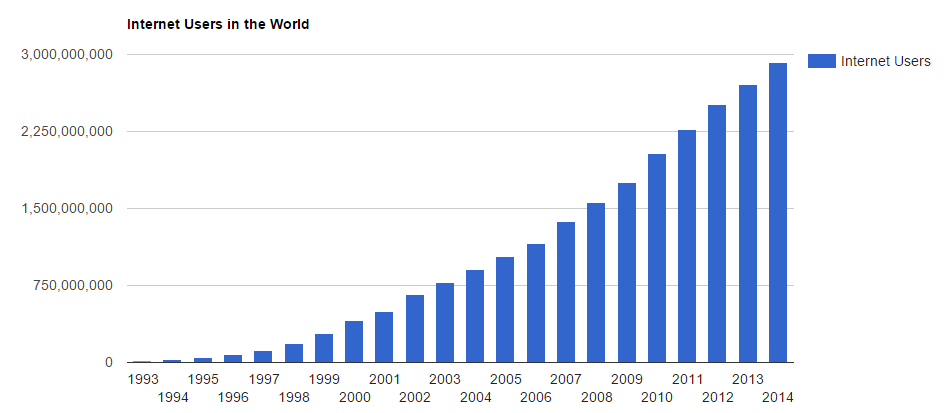
Is Digital Divide closing? number of internet user (source: internet live stats)
Unfortunately the picture is not that bright. During these very same years another significant phenomena has happened: Content is increasingly consumed online (using cloud apps and content streaming websites) as offline content is treated as outdated and an obsolete technology. For educators, this is a very challenging fact. Having a computer at home and a 2GB monthly internet subscription is not enough any more. Nowadays you’ll need a broadband connection in order to consume quality and up-to-date education materials.
In a world where 70% of U.S student state their first and most important source for homework is the internet new gaps are formed, namely the Homework Gap. According to The Pew Research Center 40% of U.S families with school-age children in the United States do not possess high broadband internet at home, resulting with education equity issues.
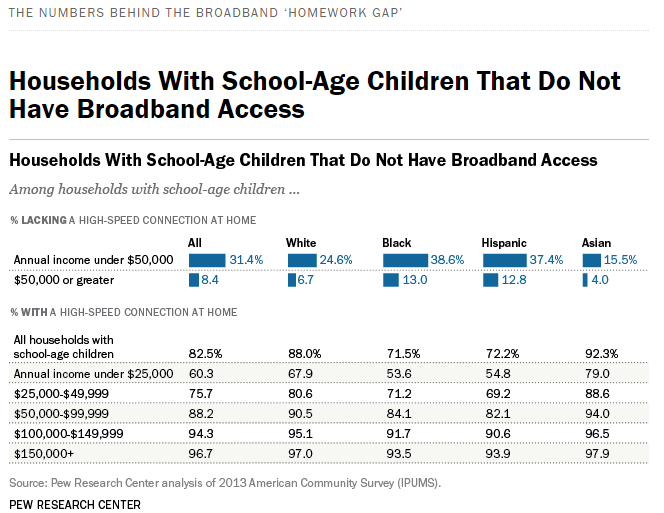
Underserved communities suffer from the new Homework Gap (source: Pew research center)
The more relevant discourse around the Digital Divide should therefore be about the gap between the have too little populations and have much populations, relating to the high-bandwidth consumption potential.
In that terms, the gap has increased by 80% between 2000 and 2007, continuing its rise. The global average internet speed connection is 5 Mbps but this is a misleading number as it includes variables of countries as South Korea (with an average of 23.7 Mbps) or Ireland (with an average of 17.4 Mbps). The more relevant statistic for this discussion is the fact only 4.6% of the world’s population is broadband connected.
10 out of all world countries hold 70% of the entire world bandwidth, the top-3 holding 50%. In 1986 U.S led with 27% of worldwide bandwidth as China held less than one percent. In 2014 China held 29% as the U.S only 13%. This phenomena of small number of countries holding most of the world bandwidth has not changed since internet exists. The countries filling this list may vary but it’s always 10 countries and always 70% of worldwide bandwidth possession.
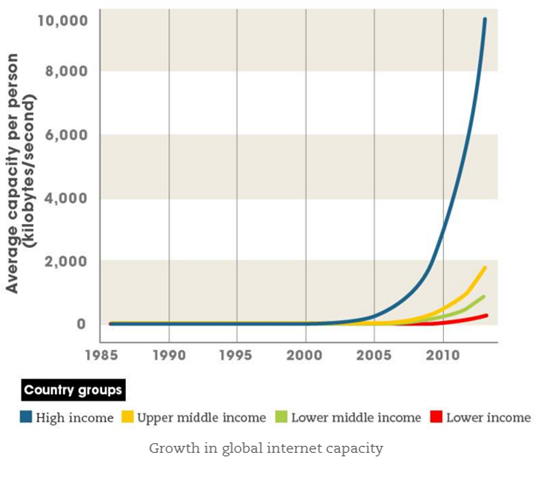
In terms of broadband, digital divide is dramatically increasing (source: SciDevNet)
In a free economy world digital divide would probably never close, as high income populations will always have better access and skill-set of internet exploit.
That’s why I believe we should focus on fighting digital poverty and make sure that everyone have the minimum settings for a sound internet consumption.
Many federal and civil society U.S organizations are putting their efforts to help underserved communities keep up with the digital age. Good examples of such endeavors include E-Rate, Lifeline , Mobile Beacon , Connect your Community, Everyoneon and NTEN.
