
Mapping the Landscape of Readia-Land: Michael Levine at The Governance Lab
23 July 2015
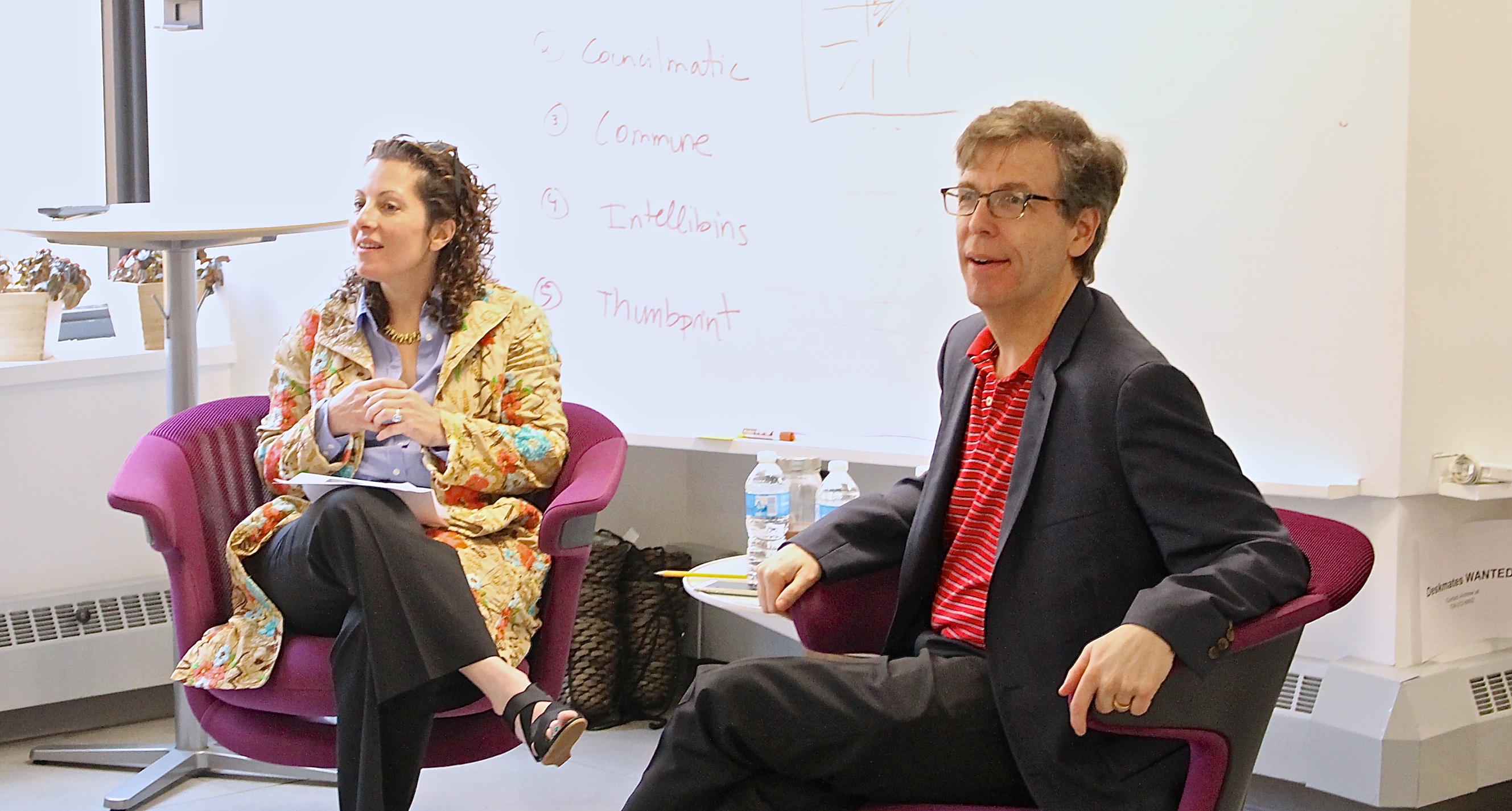
TVs, touchscreens, and smartphones are now almost ubiquitous in homes. Many young children are watching, listening to, or interacting with two to three hours of screen media per day. Far from portending the death of reading, however, in the latest installment of the Ideas Lunch series at the Governance Lab, Michael Levine, Founding Executive Director of the Joan Ganz Cooney Center at Sesame Workshop, explained how the best devices, apps, and tools can help children learn by fostering a conversation with kids about what they are seeing.
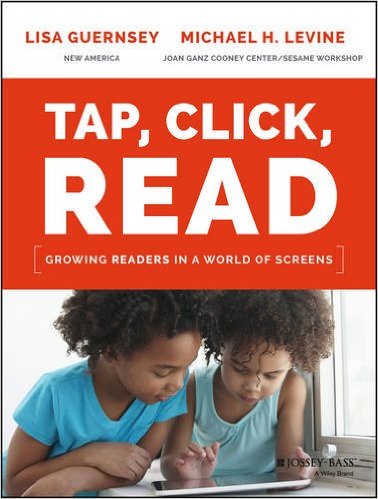
In his talk, Levine discussed his new book Tap, Click, Read: Growing Readers in a World of Screen (and other Cooney Center publications), in which he and co-author Lisa Guernsey of New America lay out the contours and landscape of what they call “Readia-land,” a place where adults have the tools and know-how to make digital media a more positive force for childhood literacy-building. In Readia-land, digital media advance childhood literacy by talking with and providing feedback to children.
Levine argued that for parents and children to be able to emigrate from the “digital wild West” of a world with over 100,000 apps currently labeled “educational” to Readia-land with its successful uses of technology for learning, it will be essential to get away from focusing on how much time students spend with media, and instead figure out how to improve the quality and effectiveness of that media engagement.
https://storify.com/TheGovLab/thegovlab-ideas-lunch-with-michael-levine-from-coo
“Do I think there’s a better way of thinking through the balance of which media works best for which kids under which circumstances? Yes. We need to get away from screen time as a construct,” he maintained. The reading skills of American children have increased a mere four points in the last 25 years, which Levine calls a “quiet crisis.” Since other countries are racing ahead, especially in science and math, “flatlining is in a sense the same as doing worse,” according to Levine. While racial performance gaps have narrowed slightly since 1969 and two-thirds of American children are not reading proficiently and half of children from low-income families are not even able to hit the lower level of “basic” on reading tests, something must be done. That “something” is not bemoaning how much time kids spend online but using technology in ways that tap into its potential to encourage conversation between kids, parents, and caregivers, between kids and other kids, and between kids and the tools themselves.
To support innovation in the educational technology marketplace, Levine also identified three areas ripe for policy innovation to support making digital media a more effective force for improving educational outcomes:
- Improving Broadband Quality and Access: Internet Service Providers have worked hard to expand Internet access in low-income and marginalized communities, but problems of speed and consistent affordability remain. Simply making the connections available is not enough to ensure children have access to cutting-edge educational media: quality and affordability are both crucial.
- Diversity and Inclusion: When schools give families low-cost tech technologies in immigrant communities, but parents’ concerns about surveillance and privacy are not adequately addressed, the children might end up not using the tools available. This is an example of how digital education innovators must tailor their services to the needs of particular communities. Relatedly, the Cooney Center recently published two studies on: [1] children’s use of educational media among the Latino population, and [2] how to promote digital equity for America’s Latino families.
- Training: Parent engagement and well-trained teachers are both essential if digital media will be able to deliver on its potential. Levine called for a “new digital age of teacher training” to ensure that teachers learn how best to select digital media — with robust curricula based on sound research — for their classrooms and guide their students in using them. Among other goals, the Joan Ganz Center’s blueprint for 21st century teacher training calls for the creation of a national Digital Teachers Corps by 2020.
Just as Sesame Street and other high quality television programs have been talking to and learning with children for decades (and thereby, according to one study, have helped to advance early childhood education as much as Head Start), there is little doubt that in a new era of tools, apps, and games, readia offer the potential to improve how children learn.
Follow Michael Levine on Twitter @mlevine_jcc. Follow the Joan Ganz Cooney Center @CooneyCenter.
Bibliography of Key Readings:
- Tap, Click, Read: Growing Readers in a World of Screens, San Francisco: Jossey-Bass & Pfeiffer Imprints, Wiley, September 2015.
- “Connecting to learn: promoting digital equity for america’s hispanic families.” The Joan Ganz Cooney Center at Sesame Workshop, Winter 2015
- “Aprendiendo en casa: media as a resource for learning among hispanic-latino families.” The Joan Ganz Cooney Center at Sesame Workshop, Winter 2015.
- “Take a giant step: A blueprint for teaching young children in a digital age.” The Joan Ganz Cooney Center at Sesame Workshop and Stanford University, Fall 2011
- The Sesame Street Effect, The Atlantic, June 17, 2015
