

Data4COVID19 Africa Challenge: Inception Meeting of the Nigerian Project
16 July 2021
This blog post was authored by the Data4COVID19 Africa Challenge team from the Nigeria Centre for Disease Control, which includes: Dr Chinwe Ochu; Dr. Babasola Okusanya; Dr. David Akeju; Dr. Samuel Adejoh; Professor Ehimario Igumbor; Dr. Yahya Disu; Mr. Michael Onoja; Mr. Sunday Eziechina; Mr. David Olatunji (Project Manager). More information on the Challenge can be found at https://datachallenge.africa/.
ABUJA, NIGERIA—On the 25th of June 2021, the Nigeria Centre for Disease Control (NCDC), in collaboration with the College of Medicine of University of Lagos (CMUL) and partners convened the inception meeting of the #Data4COVID19 Challenge in Nigeria.
The Data4COVID19 Africa Challenge is a data challenge hosted by l’Agence francaise de development (AFD), Expertise France, and The GovLab; as part of efforts to better understand and respond to the vast range of issues resulting from the COVID-19 pandemic and its consequences across Africa through innovative use of data.
In response to the call for innovative proposals made between December 15, 2020, and February 5, 2021; 83 proposals covering 22 countries were received out of which Nigeria represented by the NCDC in partnership with CMUL emerged as one of seven awardees.
A critical aspect of the response to public health emergencies is the need to provide accurate data and real time information to decision makers and the public. This has been evident in Nigeria’s response to the COVID-19 pandemic, where data is used to understand transmission patterns of virus, anticipate demand on our health services, manage the national supply chain as well as inform risk communication strategies.
In Nigeria, the #Data4COVID19 Africa Challenge is aimed at analysing existing data on COVID-19 to understand the social, economic, and political factors that influence knowledge and perception of COVID-19 among Nigerians. The project will also inform how these knowledge and perception shape population behavior, policy and response to COVID-19 safety protocols. The Nigerian project is titled “Understanding facilitators and barriers to compliance with non-pharmaceutical COVID-19 preventive measures in Nigeria.”
The aim of the inception meeting was to introduce the project to critical stakeholders and give them the opportunity to share their insights and concerns about COVID-19 that can be addressed through the project’s objectives.
In addition to providing African researchers with resources to implement data-driven projects in response to COVID-19, the project presents an opportunity to better understand the unexpectedly moderate COVID-19 situation in the region and share lessons to strengthen global pandemic preparedness.
The inception meeting was moderated by the Country Director of Resolve to Save Lives, Dr. Emmanuel Agogo. The Director General (DG) of the NCDC, Dr. Chikwe Ihekweazu, played the Chief Host. Several policymakers and key stakeholders in the COVID-19 response were present including the Director-General National Orientation Agency, Dr Garba Abari; Directors from the Federal Ministry of Health, the provost CMUL, and so on. The Special Guest of Honour was the Honorable Minister of State for Education, Dr Chukwuemeka Nwajuba.
The Director-General of the NCDC, Dr Chikwe Ihekweazu, gave the opening speech. He emphasized the utility of data in influencing policy and decision making. He expressed optimism that the results of the data exercise will help improve knowledge of public perceptions and understanding of the pandemic.
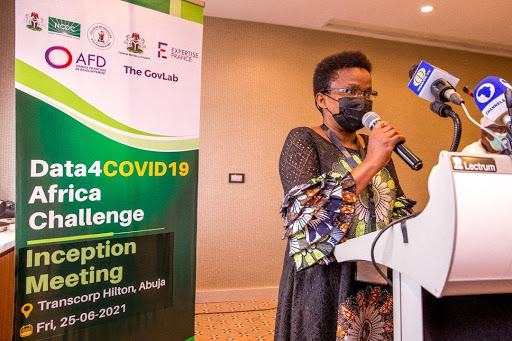 Dr Chinwe Ochu, Principal Investigator, presenting the objectives of the inception meeting
Goodwill messages were given by some key stakeholders present, including messages from the Executive Director of the Center for Communication and Social Impact (CCSI); a representative of United States Centers for Disease Control, a representative of UNICEF; the provost of CMUL; a representative of the European Union; a representative of the Nigeria Governors Forum, and the Director-General of National Orientation Agency. The Chairman of the National Health Research Ethics Committee who was also present charged the study team to follow due ethical protocol in handling data for the study. The stakeholders applauded the project initiative, lamented the chronic neglect of research funding, emphasized the need to avoid data ‘torturing’ but to allow data to speak for itself, and expressed willingness to implement recommendations from the study.
Dr Chinwe Ochu, the Principal Investigator of the project presented the objectives of the inception meeting and introduced members of the study team:
- Dr. Babasola Okusanya (Co-Principal Investigator)
- Dr. David Akeju
- Dr. Samuel Adejoh
- Professor Ehimario Igumbor
- Dr. Yahya Disu
- Mr. Michael Onoja
- Mr. Sunday Eziechina
- Mr. David Olatunji (Project Manager)
Dr Okusanya Babasola gave an overview of the Nigerian project while Prof Ehimario Igumbor, a co-investigator shared the work plan for the study.
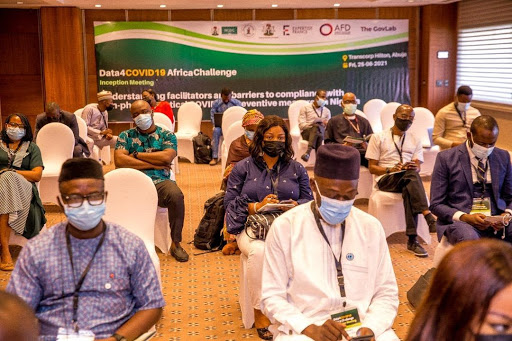 A view of the stakeholders invited to the inception meeting
Important feedback was received from stakeholders at the meeting. The representative of the African Field Epidemiology Network (AFENET) suggested that residents of Nigeria Field Epidemiology Programme (NFETP) be incorporated in the data exercise so as to build their capacity. The representative of the World Health Organization who participated virtually, lauded the project, acknowledging that there is more that needs to be known about COVID-19, especially the social and cultural perception in Africa. He expressed WHO’s support and enthusiasm in the outcome of the data challenge exercise.
The Honorable Minister of State for Education appreciated the team for such an important project and for having a well-organised inception meeting. He underscored the importance of understanding the social, economic and political drivers of the pandemic and expressed his desire to see the project interrogate data to address some nagging research questions such as why some population categories seem to be less affected by the pandemic than others. He concluded that a great demand for the outcome of the project has been created through the inception meeting and reassured the team of the government’s commitment towards implementation of the recommendations from the study. After his speech, the HMSE, supported by other dignitaries and the project team, unveiled the project plaque.
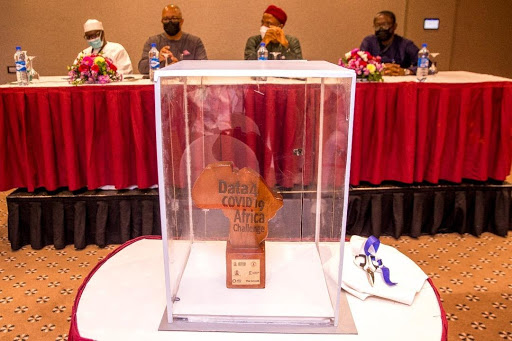 The Data4COVID19 Africa Challenge Plaque on Display
MAIN RESULTS
- The meeting had a large turnout of 50 physical participants and about 70 virtual participants, all relevant stakeholders including policymakers from ministries, departments and agencies of the federal government, public health policy implementors at national and subnational levels, partners, civil society organisations, relevant non-governmental organisations (NGOs) and many media organisations.
- Participants were properly introduced to the project and expressed delight and optimism, pledging their full support.
- Stakeholders showed keen interest in the project with an impressive demand for the outcome.
- Relevant feedbacks that will enrich the project were received from stakeholders.
